Your Cart is Empty



Written by Jodie, founder of Coastal Kidswear — based on nearly 10 years of helping Australian families pack better lunches, and feedback from our 150,000+ member School Lunches Facebook community.
After nearly 10 years helping Australian families pack better school lunches and thousands of conversations in our School Lunches Facebook group, we have seen exactly what works in a food jar, and what turns into a lukewarm disappointment by 12 noon.
This guide covers what actually keeps food hot until lunchtime, age-by-age meal ideas, and how to pick the right jar size for your child.

Yes. But only if it's used correctly. A quality insulated food jar can keep food at a safe eating temperature for up to5 hours, depending on the brand and preparation method. Here's what actually makes the difference:
If you're doing all of the above and food is still lukewarm by lunch, it's worth checking what time your child actually eats or change up the food type you are sending for a 1pm second lunch, you need a jar genuinely rated for 5+ hours and a meal that will hold the heat well
Each idea below includes why it works in a food jar, the best age range, and a capacity guide so you're not guessing on portion size.

Why it works: Liquid-based meals retain heat best of all food jar options, and soup is easy for little ones to eat with a spoon, requiring little to no chewing.
Best for ages: 3–7, especially kindy and prep where fine motor skills with cutlery are still developing.
Capacity tip: 200ml for a side, 400ml for a full lunch.

Why it works: Congee is a staple lunch in many Australian households and holds heat beautifully because of its texture and moisture content.
Best for ages: 3–10, any age that eats congee at home.
Capacity tip: 200ml for a side, 400ml for a full lunch.

Why it works: Just-add-hot-water format makes this one of the most popular requests in our Facebook group — pack noodles, seasoning, and any add-ins dry, then top up with boiling water from a separate insulated flask when you are ready to eat.
Best for ages: 6+, since this format usually needs a child confident managing the "add water" step themselves, or a teacher's help.
Capacity tip: 400ml minimum to allow room for noodles to expand.

Why it works: A lentil-based dhal holds temperature well, is naturally allergy-friendly (dairy and gluten free)
Best for ages: 4–10.
Capacity tip: 200ml for a side, 400ml for a full lunch.

Why it works: One of the most-requested "what do I pack besides sandwiches" answers from our community — a mild butter chicken is a genuine crowd-pleaser even for fussier eaters.
Best for ages: 5+.
Capacity tip: 200ml for a side, 400ml for a full lunch.

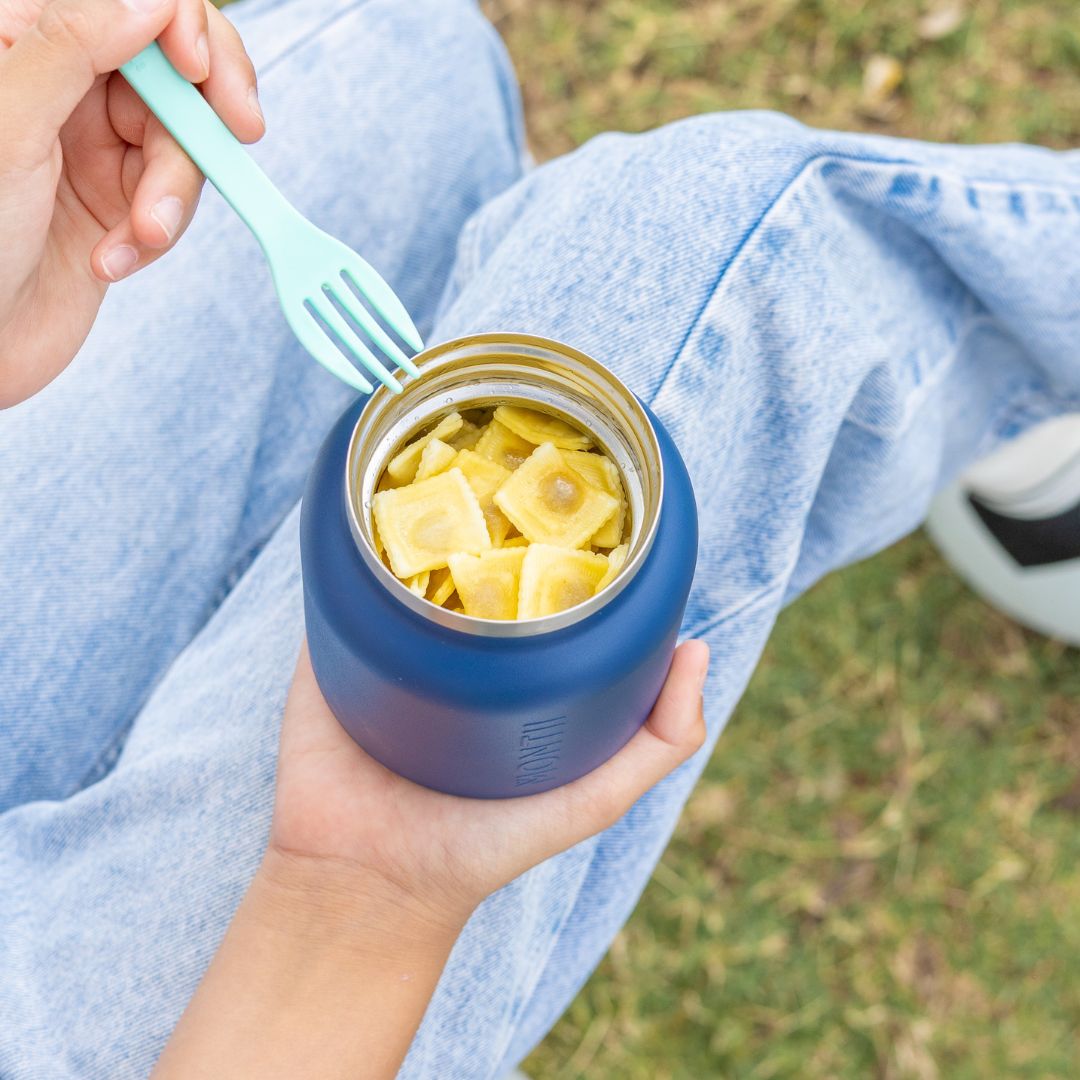
Why it works: A cheese sauce keeps pasta from drying out in the jar, solving the "pasta goes claggy" problem parents often raise.
Best for ages: 3–8.
Capacity tip: 400ml.

Why it works: A genuinely under-served idea — pack toast fingers separately (or in a small side container) and warm beans in the jar so toast stays crisp instead of going soggy.
Best for ages: 3–6, easy for little hands.
Capacity tip: 200ml jar for beans, plus a small separate compartment for toast.


Why it works: A simple, naturally sweet vegetable side that holds heat well and needs zero cooking skill — just reheat and go.
Best for ages: 2–6.
Capacity tip: 200ml as a side.

Why it works: A sweet, warming option for lunches where a hot main isn't needed — great for a cold-morning treat or alongside a cooler lunch.
Best for ages: 2–8.
Capacity tip: 200ml for a side, 400ml for a full lunch.

Why it works: The ultimate time-saver — make extra at dinner, reheat in the morning, and load straight into the jar. Saucy, slow-cooked meals are some of the best heat-retainers of any food type.
Best for ages: All ages, portion-dependent.
Capacity tip: 200ml for younger kids, 400ml for primary-age appetites.
Want more ideas? Our School Lunches Facebook group is full of real meals real Aussie parents are packing every week — see what's working for other families in the community.
Join Our Lunchbox CommunityIf you only take one thing from this guide, make it this: preheating your food jar is what separates a hot lunch from a lukewarm one.Here's exactly how to do it:
What happens if you skip this step? The jar starts at room temperature, which means it spends the first hour or more pulling heat out of your food just to warm itself up — exactly the gap between food jars that "look great" in reviews but disappoint at 1pm, and the ones that genuinely deliver.
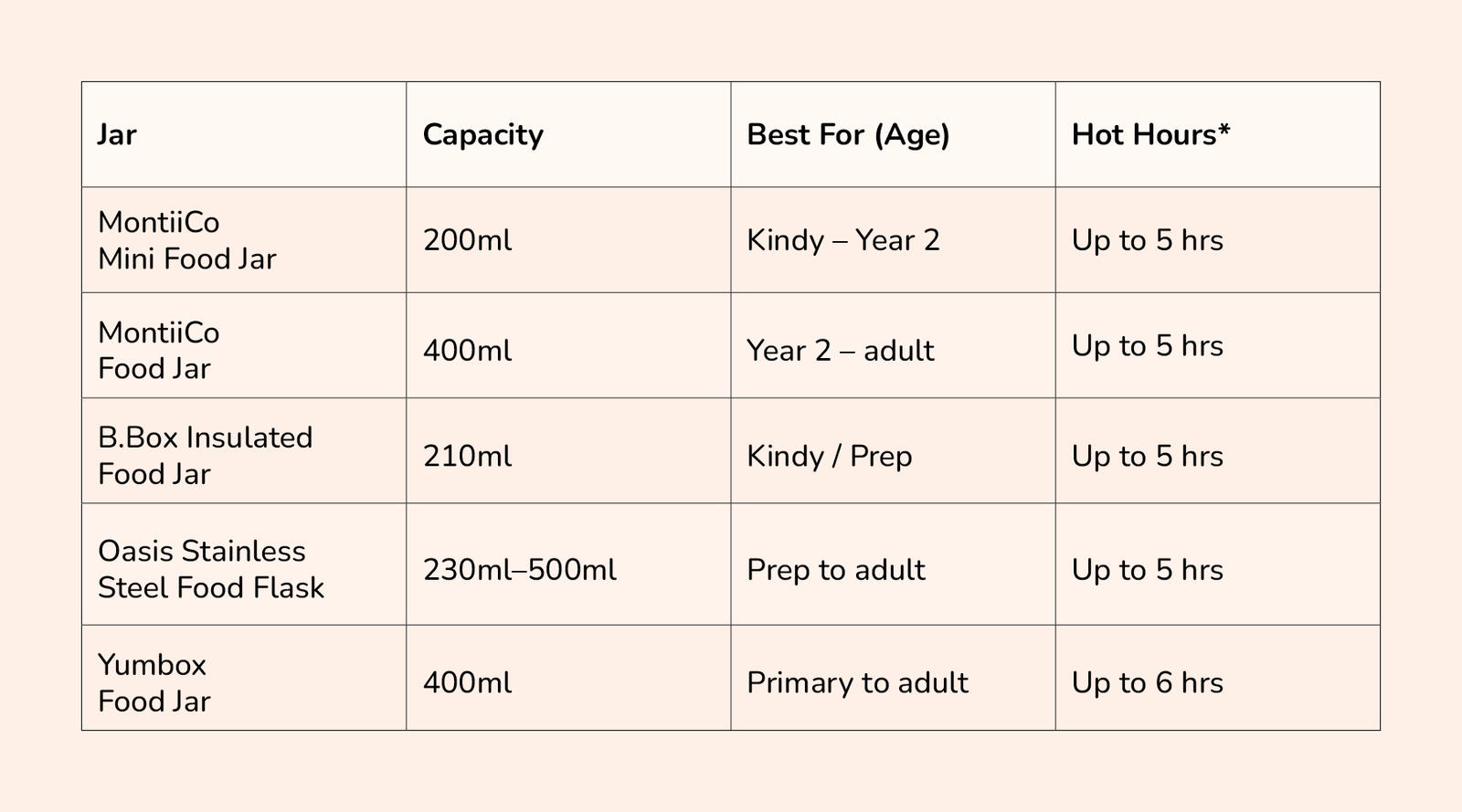
Note: hot-hold hours below are based on currently published manufacturer specs. Always check the product page for the most current rating before purchase, as brands do update insulation tech over time.This will also be dependant on food choice and food jar preparation


As a general rule: a 200ml jar suits a side dish or a smaller appetite, while 400ml+ is better for a full meal or an older, hungrier child. If your child's lunch is later in the day (after 12:30pm), size up where possible — a fuller jar holds heat longer than a half-empty one of the same capacity.
Shop The Full food Jar RangeReviews from our customers and theBBox ideas School Lunches Facebook group

"My daughter's school doesn't have a canteen, so the food jar is non-negotiable in winter. Butter chicken and rice is her most requested lunch — she comes home and tells me it was still hot!"
— Gail P - N.S.W
"I started preheating ours after seeing it mentioned in the group and it made a massive difference. Before that I genuinely thought our jar was faulty."
— Donna W - South Australia
"Mac and cheese is our go-to. My son is at daycare four days a week and it's the one thing he eats without a fuss every single time."
— Laura M - Queensland
"Spaghetti Bolognese in the 400ml MontiiCo jar, every Thursday without fail. He really looks forward to it."
— Penny W - WA
"My teen daughter loves overnight oats in her 300ml Montiico Food pod, we fill the jar with ice for 5 mins,empty the ice and dry before adding the overnight oats and fruit"
— Kate E - Queensland
Most quality insulated food jars keep food hot for 5–8 hours when properly preheated, though this varies by brand and capacity.
Check the specific product's rating, and remember that liquid-based meals like soup or curry hold heat longer than drier foods.
Food should be piping hot — ideally above 60°C — when it goes into the jar.
A food jar maintains temperature; it doesn't heat food up, so starting hot is essential to a hot lunch by midday.
Yes, but pasta dishes with a sauce (bolognese, mac and cheese) hold up better than plain pasta, which can dry out or clump.
Adding a little extra sauce helps keep texture and heat.
A 200ml jar is usually right for a 5-year-old's side dish or smaller appetite, while a 400ml jar suits a full lunch portion for a hungrier child of the same age.
It depends more on appetite and lunch timing than age alone.
Yes, when used correctly. Stick to food-grade stainless steel jars, preheat before use, avoid overfilling, and make sure kids know to let food cool slightly before eating if it's very hot
School holidays are a good time to practice using the food jars to test how long the food stays hot and to ensure your child can safely open and eat from the food jar.
Yes — Coastal Kidswear offers personalisation on our food jar range, so lunches don't go missing at school.

Browse our full range of insulated food jars and our exclusive Growing Cosy Eater Bundles — built for Aussie families who want lunches that actually arrive hot.
Shop All Food Jars